The best industrial door solutions for food & beverage safety help facilities control temperature, separate work zones, and keep high-traffic openings easier to maintain. In food production and distribution, the right doors support sanitation requirements, traffic flow, and environmental control throughout the facility.
Why Food & Beverage Processing Doors Are Critical for Compliance and Safety
Door openings can affect several parts of a food-safety program at once. A door that stays open too long may allow conditioned air to escape. Damaged seals can make temperature control harder, while surfaces that are difficult to clean may create unnecessary maintenance challenges.
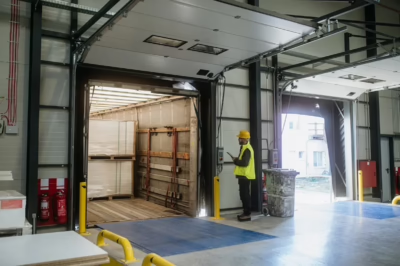
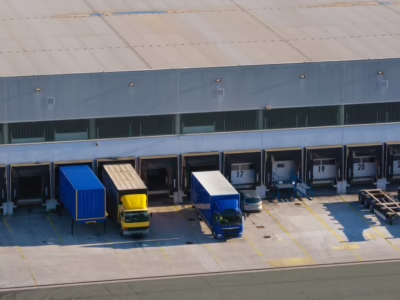
Effective food and beverage processing doors help facilities create clearer separation between production areas, cold spaces, storage zones, and loading areas. They also need to hold up to frequent use without becoming another source of downtime.
Food facilities subject to FDA Current Good Manufacturing Practices (CGMP) are expected to maintain buildings and physical facilities in sanitary condition and keep them in repair. Properly selected and maintained doors can help facilities meet those expectations by supporting cleaner, better-controlled work areas.
Temperature Control and Cold Chain Maintenance
Cold rooms and refrigerated production areas depend on more than the refrigeration system itself. Every time a door opens, warmer air can enter and conditioned air can escape.
Fast-closing doors can reduce the amount of time an opening remains exposed in busy traffic zones. In freezers and coolers, insulated panels and effective perimeter seals help limit air exchange when the door is closed.
The ideal setup can also reduce frost and condensation problems around transitions between spaces with different temperatures. For facilities handling temperature-sensitive products, that can make day-to-day operations easier to manage.
Contamination Prevention and Washdown Compliance
Production areas that require frequent cleaning place different demands on a door than a dry warehouse aisle. Moisture, cleaning chemicals, and repeated washdowns can affect door panels, hardware, controls, and seals if the system is not designed for those conditions.
Smooth, cleanable surfaces are generally easier to maintain than designs with unnecessary ledges or hard-to-reach areas. Corrosion-resistant materials can also be important where water and cleaning solutions are used regularly.
Door placement is also an important factor to keep in mind. For example, openings between raw and finished-product areas should support the facility’s traffic and sanitation plan rather than encourage unnecessary crossover.
Top Sanitary Industrial Doors for Food & Beverage Facilities
No single door type is the perfect fit for every facility. Ultimately, the best option depends on where the door will be used and what that area requires in terms of traffic, temperature control, cleaning, and durability.
High-Speed Roll-Up Doors for High-Traffic Zones
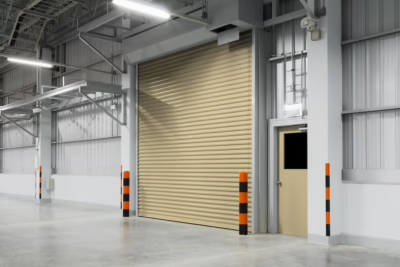
High-speed roll-up doors are well suited to production areas where forklifts, carts, or employees move between spaces throughout the day. Their faster cycle time keeps the opening exposed for less time than a slower conventional door.
That can be helpful between conditioned zones or at interior openings where airflow needs to be controlled. Some high-speed designs also use flexible curtains that can better tolerate minor contact than rigid panels.
For sanitary industrial doors in processing environments, pay attention to the curtain material, side guides, controls, and how easy the system is to clean. The door also needs to hold up to frequent cycling, washdowns, and the traffic moving through the opening.
Insulated Cold Storage & Freezer Doors
Cold-storage openings need to limit heat transfer while still supporting frequent traffic. Insulated cold storage doors use thicker panels or specialized cores to create a stronger thermal barrier between refrigerated spaces and surrounding areas.
Seals around the perimeter are just as critical as the panel itself. Damaged gaskets can allow warm, humid air into the space, which may contribute to condensation or frost around the opening.
Facilities should also consider cycle frequency. A heavily traveled freezer entrance may benefit from a different design than a door that opens only occasionally. In some cases, a high-speed door may be paired with a more heavily insulated door so each system handles a different operational need.
Stainless Steel Washdown & Hygienic Doors
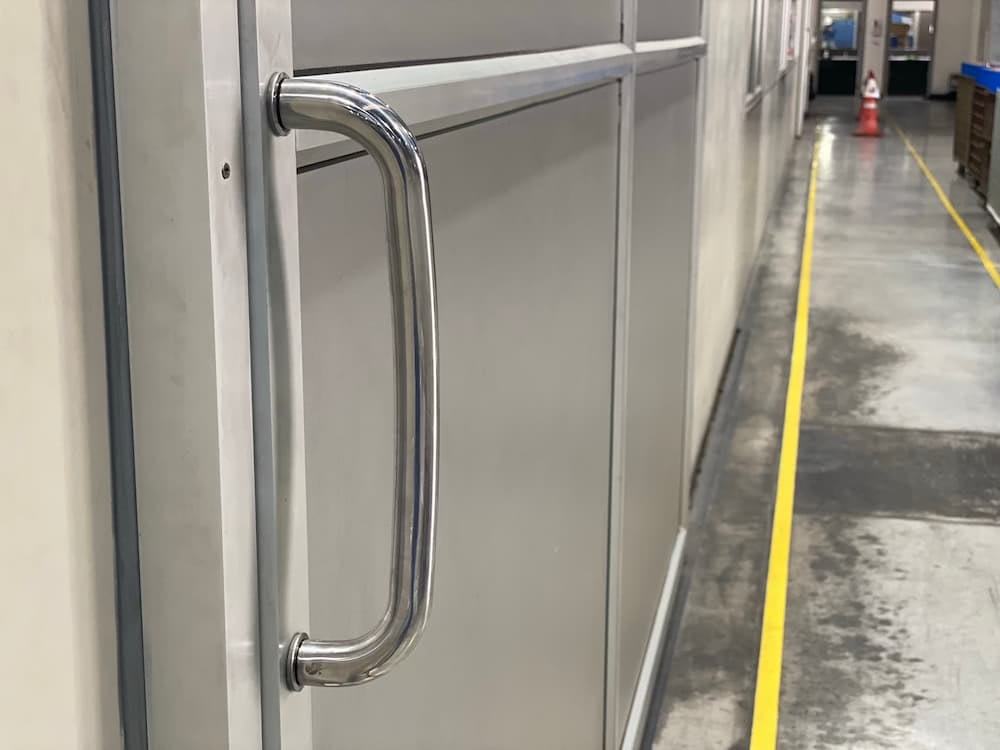
Stainless steel is commonly used in washdown environments because it resists corrosion and provides a durable, cleanable surface. It can be a strong option for processing rooms and other areas exposed to moisture or frequent sanitation procedures.
The surrounding hardware deserves the same attention. Hinges, fasteners, frames, and controls should be appropriate for the level of moisture and cleaning they will encounter.
Hygienic warehouse doors can also help separate food storage and processing areas when different sanitation requirements apply within the same facility.
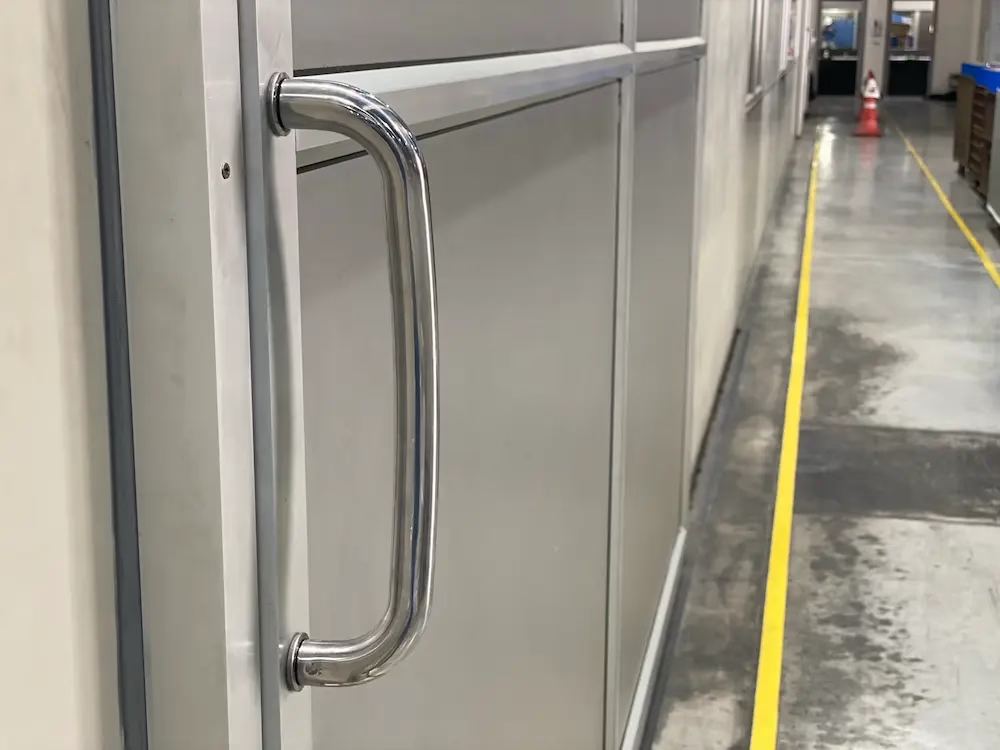
Key Features to Look For in Food Plant Overhead Doors
Before selecting food plant overhead doors, review how the opening is actually used. A door that performs well in a dry storage area may not be suitable for a refrigerated or washdown space.
Important features to consider include:
- Cleanable construction: Look for surfaces and components that can be maintained without creating hard-to-reach areas where debris or moisture may collect.
- Appropriate sealing: Perimeter seals should suit the temperature and sanitation requirements of the opening.
- Corrosion resistance: Materials and hardware need to tolerate the moisture, chemicals, or humidity present in the area.
- Cycle speed: High-traffic openings may benefit from faster operation to reduce exposure between controlled spaces.
- Impact tolerance: Areas with frequent forklift or cart traffic may need doors designed to handle incidental contact more effectively.
- Safety controls: Sensors and other protective devices should match the way employees and equipment move through the opening.
Additionally, proper overhead door installation is essential to reliable door performance. Misaligned frames, poorly fitted seals, or nearby equipment can interfere with operation and create problems over time.
Upgrade Your Facility’s Safety with DuraServ Industrial Door Solutions
Food and beverage facilities place demanding requirements on doors, especially where sanitation, traffic, and temperature control overlap. The right system should fit the work being done at the opening and remain practical to clean and maintain.
DuraServ can evaluate existing doors, help compare replacement options, and plan new installations around the needs of the facility. Our team looks at how each opening is used before recommending equipment, so the finished system supports both daily operations and longer-term maintenance.
Contact DuraServ to discuss industrial door solutions for your food or beverage facility and identify the best approach for your operation.
Photographer: ConstructViz / Shutterstock