When a commercial roll-up door starts acting up, it can slow shipping, create safety risks, and leave an opening unsecured. If you’re dealing with recurring commercial roll up garage door problems at a dock or service bay, that require troubleshooting, it’s not an issue to ignore.
This commercial roll-up door troubleshooting guide, DuraServ covers basic checks your team can do safely, plus clear signs it’s time to bring in a professional technician for overhead roll up door repair.
Common Signs Your Commercial Roll Up Door Needs Expert Troubleshooting & Repair
Most issues show up the same way: the door sounds different, moves differently, or stops responding.
Unusual Noises (Grinding, Squeaking, or Screeching)
New noises usually point to friction, misalignment, or wear. Grinding can indicate guide damage or barrel issues. Screeching often comes from dry contact points or rubbing in the guides. On steel curtains, ignoring that sound can turn a small adjustment into a bigger rolling steel door repair.
Door Is Hard to Open or Close
If the door starts hesitating, lifting unevenly, or requiring extra effort, stop forcing it. A door that suddenly feels heavy may have tension issues or binding in the guides. It might just seem like a roll-up garage door is hard to open, but the underlying cause is usually mechanical and needs inspection.
Intermittent Operation or Complete Power Loss
If the operator runs inconsistently, start with the obvious: power, disconnect switch, controls, and safety devices. If the motor hums but the door doesn’t move, stop cycling it. Repeated attempts can overheat the motor or strip internal components.
DIY Commercial Roll Up Door Troubleshooting: What to Check Before Calling a Pro
When it comes to taking a DIY approach to commercial roll up door troubleshooting and understanding how to fix a roller door, there are a few basic steps you can take.
However, you also don’t want to put anyone at risk. So, keep it limited to checks that don’t involve removing covers, loosening hardware, or working near loaded components.
Inspecting and Cleaning the Tracks
Look for debris, pallet wrap, or small impacts that dented the guides. Clean what you can safely reach. If the curtain is rubbing or the guide is visibly bent, don’t pry it straight with tools. That can create binding or uneven travel and make the situation worse.
Checking the Power Supply and Sensors
Confirm the breaker isn’t tripped. Check the disconnect is on. If your system uses photo eyes or safety sensors, wipe lenses and confirm alignment. A sensor that’s slightly out of line can stop the operator even when everything else is fine.
Lubricating Moving Parts
Use a manufacturer-approved lubricant on appropriate contact points. Avoid spraying inside operator housings. If lubrication changes nothing, that’s useful information—because it suggests the issue isn’t a simple friction problem.
How to Fix a Jammed Commercial Roll-Up Door
If your roll-up door is jammed, stop and assess before anyone tries to muscle it open. Look for obvious obstructions at the bottom bar and inside the guides. If the curtain looks skewed, or the guides show impact damage, forcing movement can tear slats or twist the curtain.
If the door binds at the same point each time, that consistency often points to a dented guide or a misaligned component. When you can’t clear it with basic cleaning, it’s time to call for a roll-up garage door repair service and keep people away from the opening.
Solving Opening and Closing Issues
Opening/closing problems for commercial roll up doors usually fall into two categories: the door is physically restricted (binding, debris, misalignment) or the operator is struggling under load (tension, motor, limit settings, safety circuit).
Pay attention to patterns, like:
- If the door stops at the same spot each time, look for guide damage or something consistently catching.
- If the door reverses while closing, the safety system may be triggering or the door may be binding near the floor.
- If the door hums or stalls under load, the counterbalance may be off or there may be mechanical resistance.
If your facility runs multiple high-cycle openings, this is where you typically see the first signs that a warehouse roll-up door repair is needed. The earlier it’s addressed, the less likely you are to end up with curtain damage or an operator failure.
Advanced Roll Up Repairs: When DIY Troubleshooting Isn’t Enough
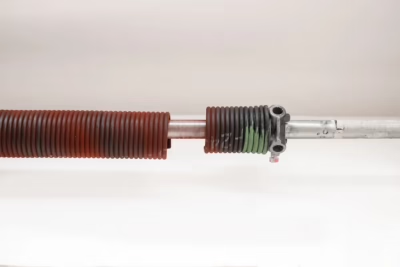
Some commerical roll up repairs should stay strictly in professional hands. If someone on your team is trying to figure out how to adjust tension on a commercial roll-up door, that’s your cue to stop the DIY path. Springs and counterbalance systems store significant energy. The wrong move can cause injury or sudden door movement.
The same applies to jobs involving barrel tension, cable work, limit setting, or release mechanisms. Even if the door is a smaller roller door, the risks are still very real. This is also where people unintentionally create bigger damage, like bent guides, torn curtains, or an operator that burns out from repeated strain.
When you’re trying to decide when to call for help, here’s a practical line: If the fix requires tools near loaded components, it’s no longer basic garage roller door repair – it’s a service call for a professional garage.
Preventive Maintenance to Avoid Costly Repairs
Preventative maintenance reduces downtime because it catches wear early. It also helps standardize performance across multiple dock positions. Maintenance should include guide inspection, fastener checks, safety device testing, and operator settings verification.
Over time, scheduled care reduces emergency calls and extends equipment life, especially in facilities where impacts are common. That’s why many sites invest in planned service rather than waiting for failures that lead to industrial roller door repairs.
It also prevents the snowball effect, where one small issue leads to multiple failures. A minor alignment correction today is cheaper than replacing hardware next month. This is where routine roll-up door repairs are actually a cost-control strategy, not an inconvenience.
Keep Your Facility Moving With Pro Commercial Roll Up Door Repair from DuraServ
If your team is stuck searching for how to fix a roll-up door during a shift, the safest move is usually to stop forcing the system, secure the area, and call a technician. DuraServ provides commercial roll-up door repair with a safety-first approach, clear communication, and repairs that are built to hold up under daily use.
We also support sites that have mixed door types across the property. For teams that maintain multiple openings, we can help plan routine garage roller door repairs and maintenance so issues get addressed before they interrupt operations.
If you’re dealing with a commercial or warehouse door that won’t move safely, contact your local DuraServ team, and we’ll help you get it diagnosed and handled properly.
Photographer: Tom Harwood / Shutterstock