Adding a gate can make your property feel more private and give you better control over who comes and goes. When you compare sliding vs. swing gates, the right fit will depend on the shape of your driveway, the slope of the ground, and the space available near the entrance.
At DuraServ, our experienced team can help homeowners sort through those details and choose a gate system that fits the property and works reliably over time.
Understanding How Sliding and Swing Gates Work
There are several key differences between the two driveway gate types:
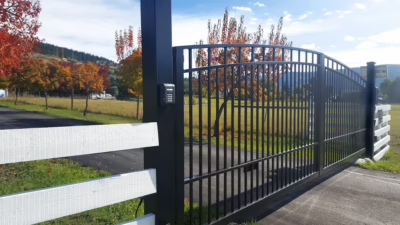
- A swing gate opens inward or outward on hinges. It may use one panel or two that meet in the middle. Because the gate travels through an arc, it needs a clear path on the side where it opens. Swing gates work especially well when there is generous space between the entrance and the home.
- A sliding gate moves sideways along the fence line. It may roll on a ground track or use a cantilever system that suspends the panel above the driveway. Sliding designs are often chosen where the driveway is short, the entrance sits close to the street, or there is not enough room for panels to swing freely.
Key Benefits: Space, Layout, and Property Slope
Sliding and swing gates each offer advantages that work well for different properties. The room around the entrance and the slope of the driveway can help determine which design will be easier to install and use.
When Space Limits Your Options
Swing gates need enough driveway space to open through a full arc, which can make them difficult to use on shorter properties. Outward-swinging designs may also be limited by sidewalks or nearby roads.
Sliding gates keep the driveway open as they move, but they need clear space along the fence line. Cantilever models require even more room because part of the gate extends beyond the opening for balance.
Dealing with Sloped or Uneven Ground
Sloped driveways can create clearance problems for swing gates, especially when the panels open uphill. Custom hinges may help, but the grade can still limit movement.
Sliding gates often work better on a slope because they travel across the entrance rather than over it. Tracked systems need a stable, well-drained surface, while cantilever gates avoid ground tracks and may be better suited to uneven pavement or areas where debris tends to collect.
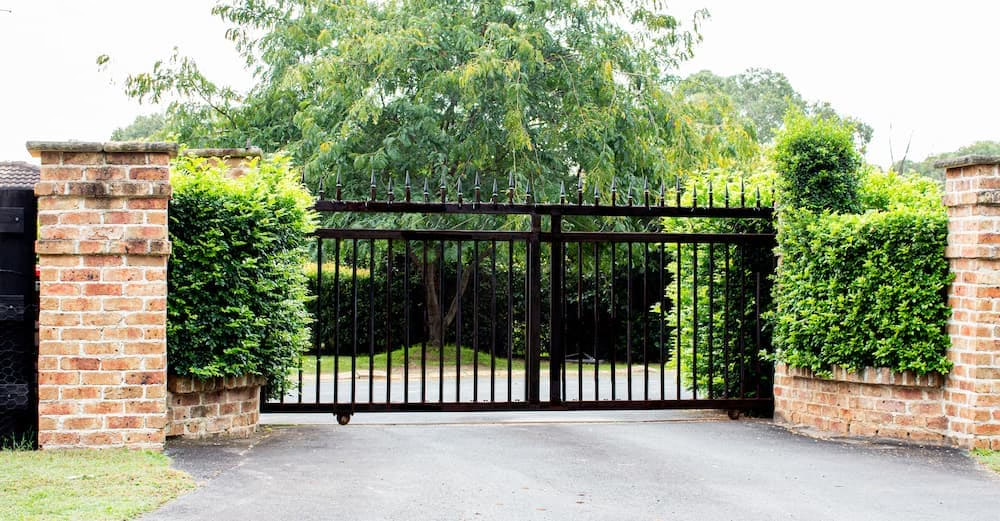
Space & Layout Considerations
Before choosing a gate style, take a close look at the entire entrance area. The way vehicles approach the driveway, the space along the fence, and nearby features can all affect how well the system works.
- Driveway depth: A long truck or trailer may need extra room to wait inside the property. An inward-swinging gate can reduce that space, especially on a shorter driveway.
- Fence-line clearance: Sliding gates keep the driveway open, but the panel needs enough room to retract along the fence. Make sure it will not block a walkway, pedestrian gate, or another part of the yard.
- Nearby obstacles: Walls, trees, utility equipment, and landscaping may interfere with the gate’s movement or limit where posts and operators can be installed.
- Wind exposure: Solid swing gates can catch strong gusts and place added strain on the hinges and operator. Open designs allow more air to pass through, while sliding gates handle wind pressure differently because they move along the fence line.
- Power and access controls: Plan for keypads, remotes, vehicle sensors, or smartphone controls early in the project. Running conduit before the driveway or landscaping is finished can minimize hassle and help you avoid extra costs.
Maintenance, Security, and Long-Term Performance
Both swing and sliding gates can perform well for years when the gate system is installed correctly and maintained regularly. With a few practical steps, you can protect your investment for the long term:
- Keep the gate moving freely. A dragging panel, uneven track, or stiff hinge places extra strain on the operator. Addressing movement problems early can help prevent wear on the motor and hardware.
- Check the closing point. Sliding gates should secure firmly at the receiving post, while swing gates need properly sized latches and hardware. Loose or misaligned components can weaken the entrance and affect how reliably the gate closes.
- Watch the posts and supports. Posts must be suited to the weight of the gate and the ground conditions. Shifting or leaning supports can affect alignment and create larger repair needs over time.
- Clear the travel path. Remove leaves, gravel, or other debris from tracks and around hinges. Obstructions can interrupt movement and keep safety devices from working as intended.
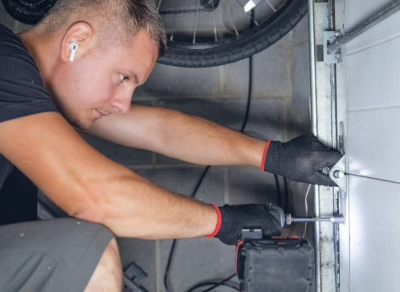
- Test the safety features. Photo eyes, sensing edges, and manual release systems should be checked regularly, especially on automated gates. These features need to respond correctly when a vehicle or person enters the gate’s path.
FAQs: Swing vs. Sliding Gates
Is a sliding gate better than a swing gate?
A sliding gate is often better for a short driveway, sloped entrance, or property without room for an opening arc. A swing gate may be preferable when the driveway is level and has plenty of depth.
Which gate type is more affordable?
Swing gates are often less expensive to install because their hardware and foundation requirements may be simpler. Final cost depends on the gate and site conditions.
Do sliding gates require more maintenance?
Tracked sliding gates may need more cleaning because debris can collect in the track. Cantilever gates avoid that issue but still require roller and hardware inspections. Swing gates need regular hinge and operator checks.
Can a swing gate be installed on a sloped driveway?
Yes, but the direction and degree of slope must be evaluated. Rising hinges or custom fabrication may help the panel follow the grade, although a sliding gate is often the more practical option.
Which gate is more secure for a home?
Both can provide good residential security. The gate construction and access controls matter more than the movement style alone.
Finding the Right Gate System for Your Property
Every property is unique, so the best exterior gate system is not always obvious from the start. An experienced team can evaluate the entrance, explain which designs are realistic, and help you avoid problems that may not be apparent during the planning stage.
Contact DuraServ today to receive expert guidance and a personalized quote for your home.